











United Kingdom

SENTINEL Lift emergency connection service
Only available in
Overview
SENTINEL – The only UK pro-actively managed, resilient lift emergency connection service. Remove hassle and costs whilst fulfilling your obligations . With diagnostic health checks, fault resolution and lifetime provisioning, Sentinel is all you need to keep your lift connection resilient. Always.
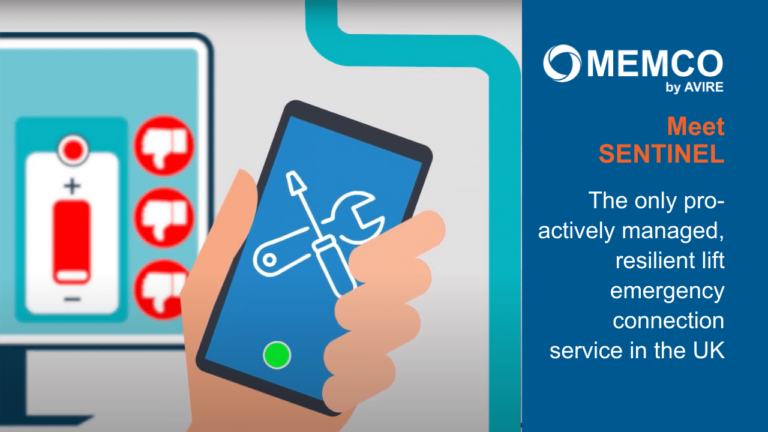

Meet SENTINEL: the only pro-actively managed, resilient lift emergency connection service in the UK.
- Secure a lifetime connection: Enjoy future upgrades & battery replacements as part of our service.
- Seamless transition: We handle the rollout across your entire portfolio in collaboration with your lift partner, no matter how big or complex the project.
- 24/7 Portfolio Insight: Access real-time connectivity status through our cloud platform, keeping you informed about your network’s performance.
- Minimize liability risks: Receive regular connectivity reports and immediate notifications if issues arise, ensuring prompt on-site action.
What is SENTINEL?
SENTINEL is a managed service designed specifically for lift environments. It ensures that lift emergency communications remain connected, visible and professionally managed throughout the lifetime of the installation.
Rather than relying on standalone devices or unmanaged connections, SENTINEL provides continuous oversight. Connectivity and battery status are monitored, issues are identified early, and visibility is provided via AVIRE Hub, supporting informed decision-making and risk reduction. SENTINEL does not just connect lift alarms; it actively manages them.
The SENTINEL Service
SENTINEL is delivered as a single, integrated managed service, supported by three service elements:
Connectivity – DCP
Resilient, roaming cellular connectivity with battery backup, designed to support critical lift communications.
Communication – DAU
Emergency communication hardware supporting EN81-28 requirements.

Service Management – AVIRE Hub
A cloud-based platform providing visibility, diagnostics, audit trails and service insight, supporting proactive intervention and transparency.
We are proud to support the Fit to Switch campaign as a National Champion Sponsor, and are committed to raising awareness about the PSTN switch-off and its imminent impact on critical lift emergency communications.
Who is SENTINEL for?
SENTINEL is designed to support multiple stakeholders across the lift ecosystem.
Find information tailored to your role:
Lift Consultants
Support evidence-based, risk-aware advice
Lift Contractors
Your Installation and delivery partners
Building Owners & Facilities Managers
Gain visibility and confidence in lift emergency communications
Channel Partners & Comms Providers
Deliver managed lift comms without added complexity
Frequently Asked Questions
What is the PSTN switch-off and why should I act now?

The Telephone network in the UK, based upon the Public Switched telephone Network (PSTN) is closing down. This affects ‘landlines’, which are used widely to provide connectivity for emergency lift communications systems. This is happening at the end of January 2027, and post that date, all existing lines will be terminated. This is often known as the Analogue to Digital switch, moving from a tone-based call set up and signalling arrangement to an Internet Protocol (IP) based solution.
Acting now means that alternative arrangements can be made in time, avoiding risk to passenger safety and compliance.
Why do lift emergency phones need upgrading?
If lifts use PSTN ‘Landlines’ – often call Analogue lines – for communications by the in-car emergency console, they will stop working at the end of January 2027. An alternative ‘Digital’ communications solution will be necessary in order to ensure ongoing compliance.
What happens if we do nothing?
For lifts with PSTN lines, the line will stop working, plain and simple. This will mean the lift is no longer compliant with EN 81-28, putting building users at risk and exposing housing providers/building owners and FM operators to inspection failures, legal liability, and urgent, costly retrofits.
Will Fibre be a solution?
Possibly. Fibre networks are primarily being built to meet the needs of residential consumers – and the needs of businesses have not really been considered, although some network builders have looked to fix this in specific geographies, or where a specific contract has been let. If fibre has been built to a building, it’s not guaranteed that it’s available to service the needs of the emergency lift lines – in terms of capacity being available, or being pre-built to a suitable connection point in a lift room.
Communication Providers should know the answer to this question, but if there’s not a definitive ‘Yes’ (in being available to a lift room and ready to take an order), then count on long delays and increased provision costs to get service.
For consistency of operation across the UK, the best option is to move to a Cellular-based solution, like SENTINEL from MEMCO by AVIRE.
How does SENTINEL compare with basic GSM solutions?
Basic GSM units can lose signal, SIMs may expire, and faults often go unnoticed until tested. SENTINEL uses roaming SIMs to find the strongest network, includes extended battery backup, and provides 24/7 monitoring via the AVIRE HUB.
Who is responsible for batteries and SIM cards?
In unmanaged systems, housing providers often end up responsible. With SENTINEL, both are monitored automatically, and alerts are sent if there is a problem. This means you don’t have to worry about checking or replacing them yourself.
Will SENTINEL help with EN 81-28 compliance?
Yes. SENTINEL meets EN 81-28 requirements with power resilience, automated test calls, and fault alerts, keeping your lifts compliant and safe.
Who installs and supports SENTINEL?
SENTINEL is installed by your current lift maintenance provider, with AVIRE providing the technology, monitoring, and ongoing support.
Is SENTINEL future-proof?
Yes. SENTINEL is 4G-ready, uses managed SIMs, includes battery backup, and is supported by AVIRE HUB, ensuring reliability now and beyond the PSTN switch-off.
Files and Resources
SENTINEL-FAQ
Support documents

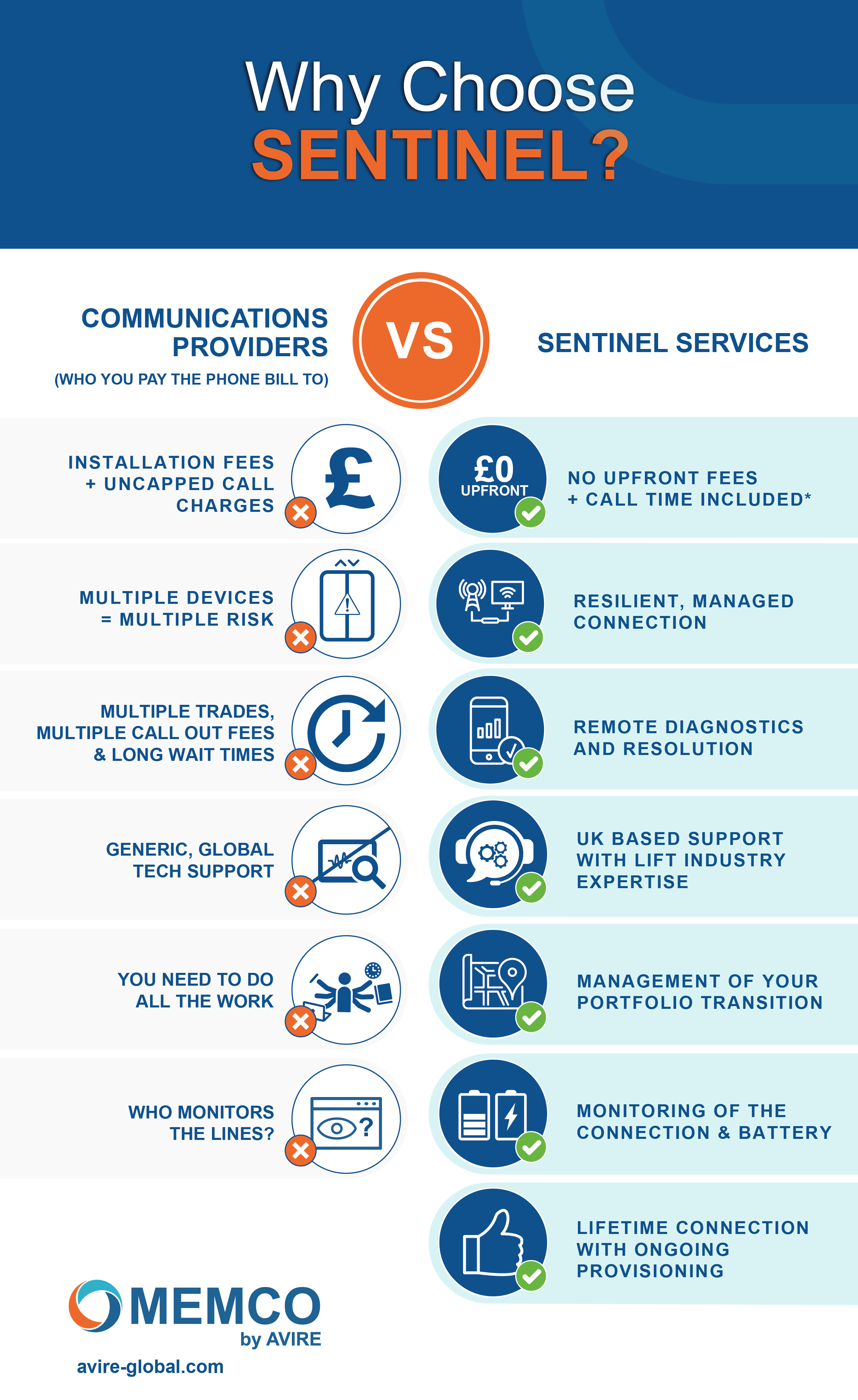
Why-choose-SENTINEL
Support documents
DIGITAL-SWITCH-KEY-DATES
Support documents
Meet SENTINEL: the only pro-actively managed, resilient lift emergency connection service in the UK.
You might also be interested in
Legacy
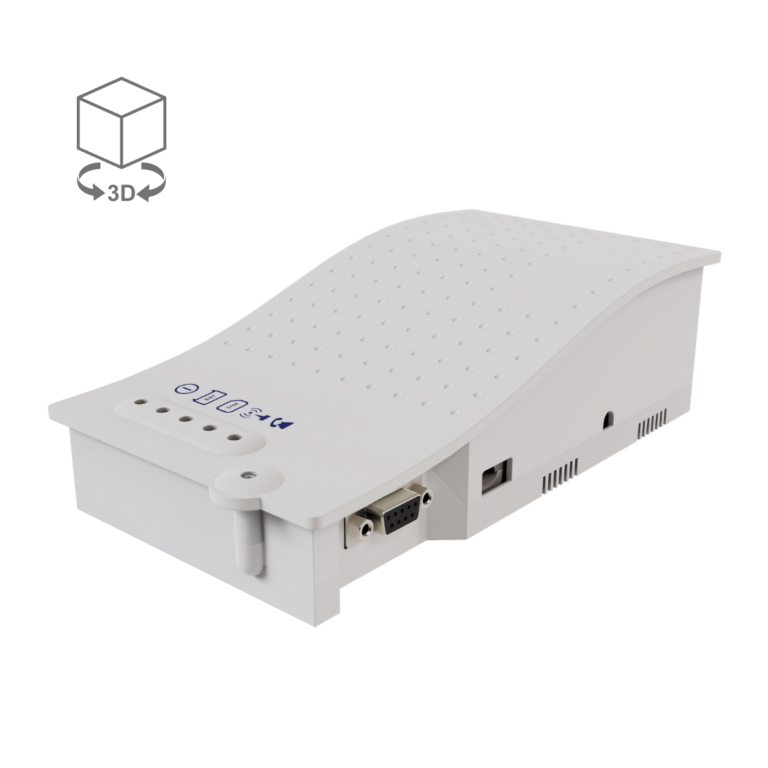
DCP Lift Digital Communication Platform
Bring your lift emergency telephone system into the digital age with the Avire Digital Communications Platform (DCP).
New
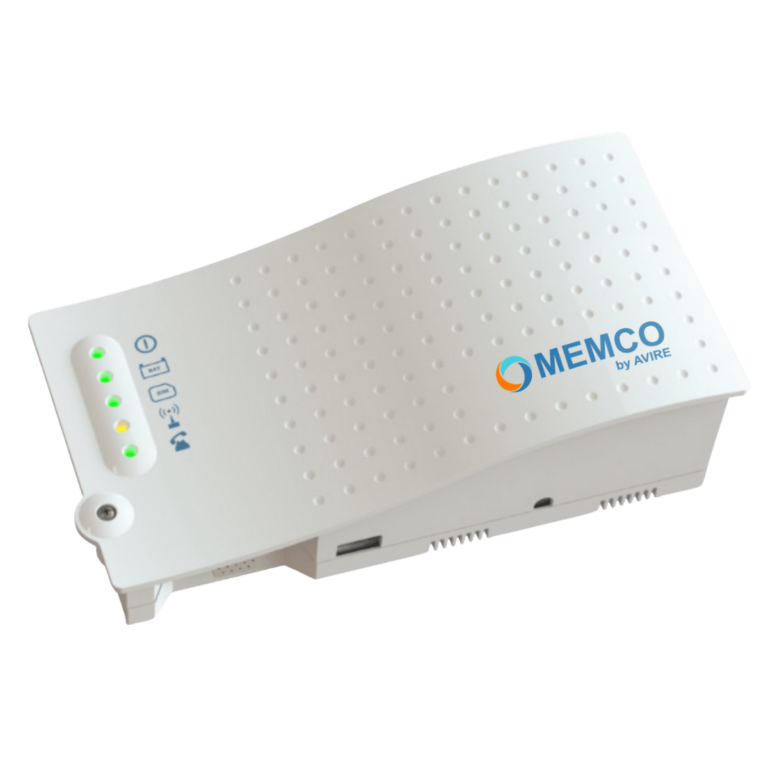
4G VoLTE DCP 2.0 Lift Digital Communication Platform
Ensure passenger safety and compliance with AVIRE’s advanced 4G Digital Communication Platform (DCP) 2.0. Designed to meet the latest EN-81-28 standards, this innovative solution secures reliable, real-time lift emergency communication while adapting to the evolving needs of modern buildings and infrastructure changes. Whether you’re upgrading from 2G or seeking a dependable 4G VoLTE connection, the 4G DCP 2.0 is the smart choice to future-proof your elevator emergency systems.

AVIRE HUB Lift Monitoring Software
Take control of your entire lift installation portfolio with advanced lift monitoring software in the AVIRE HUB. An intuitive dashboard helps ensure nothing is missed, while automated test-call logs provide a full audit trail. The AVIRE Hub operates on an ISO 27001 certified platform, giving our customers confidence that system access, data handling and operational process are managed securely. ISO 27001 is the international standard for information security management.
Case studies

Related Articles
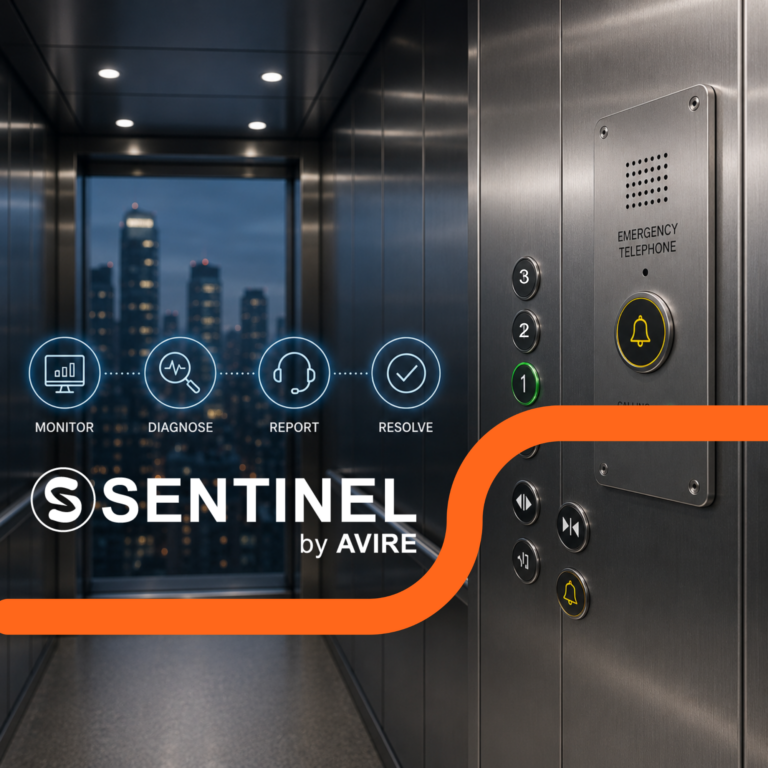
How does SENTINEL Work?

Why Managed Lift Emergency Communication Services Are Critical for the Healthcare Sector
The PSTN Switch-Off Has Already Started. Is Your Customers’ Region Affected?

MEMCO by AVIRE Shares Large-Scale Alarm Migration Insights at Lift Symposium 2025