











Lift door damage is one of the leading causes of lift downtime, maintenance call-outs, and repair costs in high-traffic buildings.
In the UK, where ageing infrastructure and heavy lift usage are common, preventing door damage is becoming a priority for maintenance providers and building owners.
Why Is Lift Door Damage So Common?
Lift doors are among the most frequently used and vulnerable components in any lift system.
In environments such as:
- retail stockrooms
- logistics and distribution centres
- hospitals and healthcare facilities
- commercial buildings
they are regularly impacted by:
- trolleys
- pallet trucks
- fast-moving users
This leads to:
- repeated maintenance visits
- unplanned downtime
- costly repairs and replacements
Replacing a lift door can cost between £3,000 and £8,000, making it a significant operational expense.
How Big Is the Problem?
The scale of the issue is amplified by ageing lift infrastructure and rising maintenance costs:
- Over 50% of lifts in Europe are more than 20 years old
- Lift maintenance can account for up to 20% of a building’s maintenance budget
- Preventative maintenance strategies can reduce costs by 18–25%
With millions of lifts in operation across Europe, improving reliability and reducing downtime is critical.
What Is the Best Way to Prevent Lift Door Damage?
The most effective way to reduce lift door damage is to prevent collisions before they happen, rather than repairing damage afterwards.
This is where Smart 3D lift door detection provides a clear advantage.
What Is Smart 3D Lift Door Detection?
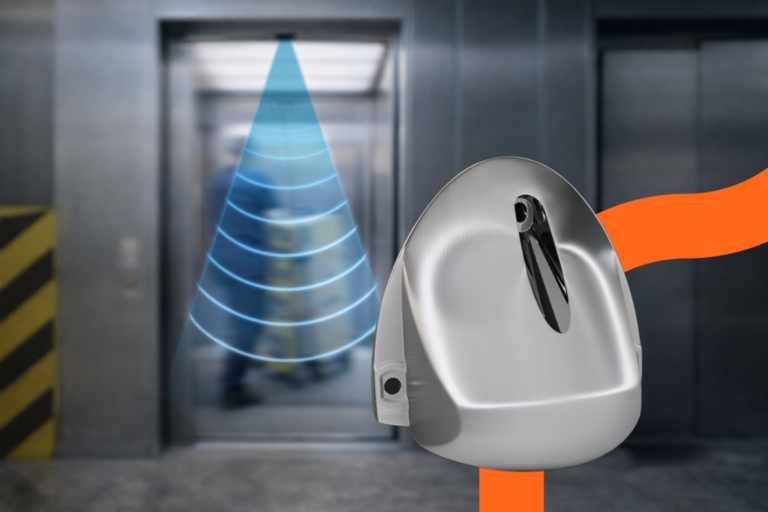
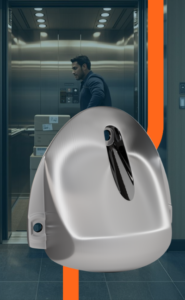
Smart 3D detection (from MEMCO by AVIRE) is an advanced lift safety system that uses microwave radar to detect movement in front of lift doors.
Unlike traditional light curtains, which only detect objects within the doorway, Smart 3D:
- detects people and objects approaching the lift
- identifies potential collisions early
- triggers doors to reopen before impact
This allows building operators to move from reactive maintenance to a preventative approach.
What Are the Benefits of Smart 3D Detection?
Installing Smart 3D detection can deliver measurable benefits:
- Reduced lift door damage and repair costs
- Fewer maintenance call-outs
- Improved lift uptime and reliability
- Enhanced passenger safety
- Lower long-term operational costs
It also filters out cross-traffic, ensuring doors only respond when needed.
Real-World Results: Does It Work?
In a high-traffic retail environment, frequent door impacts were causing repeated damage and operational disruption.
After installing Smart 3D detection:
lift door damage was reduced by more than 50%
This demonstrates how preventative technology can significantly reduce both maintenance costs and downtime.
Why Aren’t Light Curtains Enough?
Traditional lift light curtains only detect objects within the door opening.
They do not detect:
- approaching users
- fast-moving trolleys
- last-second entry attempts
This limitation makes them less effective in busy environments.
Smart 3D extends detection beyond the doorway, helping prevent impacts before they occur.
Where Is Smart 3D Most Effective?
Smart 3D is particularly suited to environments with high lift usage:
🛒 Retail stockrooms
🏥 Hospitals and healthcare facilities
📦 Logistics and distribution centres
🏨 Hotels and service lifts
🏢 Commercial buildings with high lift usage
In these settings, it helps protect equipment, reduce costs, and improve reliability.
What Is the Future of Lift Maintenance?
The lift industry is moving towards smart, preventative maintenance strategies driven by:
- cost reduction
- improved uptime
- enhanced safety
- smarter building technologies
With 65% of building owners now favouring preventative maintenance approaches, solutions like Smart 3D are becoming essential.
Learn More About Smart 3D Lift Detection
If you’re looking to reduce lift door damage, minimise downtime, and optimise maintenance costs, Smart 3D offers a proven solution.
Contact Our Team
Want to find out how Smart 3D can work for your installations?
Get in touch with our team to discuss your requirements and reduce lift maintenance costs.