












2G & 3G Network Sunset in the UK:
Keep Lift Emergency Communications Safe and Connected
.
As UK mobile operators retire 2G and 3G networks and shift fully towards 4G and 5G, lift emergency communications face increasing risk. What began as a series of network adjustments has now become a long-term change affecting thousands of lift installations across the country.
This page brings together the latest industry information and practical guidance to help facilities managers and lift service providers ensure their lift alarms remain reliable and compliant, today and throughout the ongoing sunset of legacy networks.
Why the 2G/3G Sunset Matters for Lifts
Lift emergency telephones have historically relied on:
- 2G networks for voice calling
- 3G networks for fallback
- Roaming SIMs to improve resilience
- PSTN lines or PSTN-to-GSM converters
As these older networks are withdrawn, any lift system without 4G VoLTE capability, robust roaming, and monitoring faces elevated risk of call failures.
This is not simply a technical shift, it has implications for LOLER compliance, passenger safety, and legal duty of care.
What Has Changed So Far?
VMO2’s withdrawal of 2G roaming for non-O2 SIMs (including many European-based roaming SIMs) became effective in late 2025. This change has removed a key fallback path that many lift alarms unknowingly depended on.
Key milestones now completed:
- Removal of inbound 2G roaming for non-O2 SIMs
- Full retirement of 3G
- Gradual reallocation of 2G spectrum
These changes continue to affect signal availability inside lift shafts and machine rooms.
- 2G retained until at least 2030
- Now a primary fallback for lifts using roaming SIMs
2G services remain active into the late 2020s
No 2G network
3G retirement completed
Find out when networks across the UK & Ireland will phase out 2G/3G
| Country | Network | Service | Closure |
|---|---|---|---|
| United Kingdom | Vodafone | CSD | Oct-2024 |
| United Kingdom | Vodafone | 3G | Mar-2025 |
| United Kingdom | Vodafone | 2G | Dec-2033 |
| United Kingdom | Virgin Media O2 | CSD | Oct-2024 |
| United Kingdom | Virgin Media O2 | 3G | Dec-2025 |
| United Kingdom | Virgin Media O2 | 2G | Dec-2033 |
| United Kingdom | Three | 3G | Dec-2025 |
| United Kingdom | EE | 3G | Mar-2025 |
| United Kingdom | EE | 2G | May-2029 |
| Ireland | Vodafone Ireland | 2G | Dec-2025 |
| Ireland | Vodafone Ireland | 3G | Apr-2025 |
| Ireland | Three | 3G | Dec-2025 |
| Ireland | Three | 2G | Dec-2025 |

Why These Changes Create Hidden Risks for Lifts
Even buildings not contracted with O2 can be affected. Historically, roaming SIMs commonly latched onto O2’s 2G network during weak-signal conditions, a “silent fallback” that many facilities teams never saw.
With that fallback now gone, the result can be:
- Longer call connection times
- Degraded call quality
- Dropped emergency calls
- Total loss of alarm connectivity
Engineers across major UK cities, including Glasgow, Birmingham and Liverpool, have already reported significant increases in low-signal alerts as the transition progresses.

Common Misconceptions About 4G Lift Alarms
“It’s a 4G device, so it’s safe.”
Not always. Many devices fall back to 2G if the 4G signal dips. That fallback no longer works.
“Any 4G gateway will do.”
Low-cost units often lack battery backup, meaning the alarm fails the moment power is lost. Power outages are precisely when emergencies are most likely.
“Roaming SIMs are future-proof.”
Not unless they:
- support full 4G roaming
- are non-steered
- do not prioritise legacy networks
Many older SIMs still prioritise 2G, leading to failures after sunset changes.
Which Lift Systems are Most at Risk Today?
- 2G-only gateways
- 3G-only or hybrid 2G/3G devices
- Early-generation roaming SIMs
- Devices falling back to 2G when 4G weakens
- Installations with poor indoor coverage
- Systems without battery backup
- Any lift alarm lacking VoLTE configuration
Ongoing network changes mean that risk continues to increase year by year.

How Roaming Works Now
Since the withdrawal of O2’s 2G access for roaming SIMs:
• Lifts now roam to Vodafone or EE
• If neither network reaches the lift shaft, the alarm will fail
• There is no longer any 3G safety net
• Devices without VoLTE capability cannot place voice calls via LTE
• SIMs configured to “prefer 2G” often become unstable or cannot connect at all
This makes modern hardware, SIMs and monitoring essential.
Future-Proofing Lift Emergency Communications
Modernising lift alarms requires three pillars of resilience:
4G VoLTE-Capable Hardware
AVIRE’s DCP gateways meet these requirements and are fully VoLTE compatible.
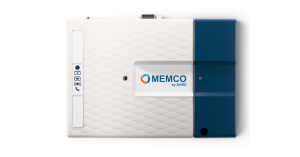
A compliant gateway must support:
- 4G-only operation
- Reliable battery backup
- Automatic recovery after power loss
- E.164 international number formatting (0044, 0031, etc.)
Non-Steered, Intelligent 4G Roaming SIMs
All AVIRE UK SIMs from October 2025 onward meet these requirements.

Your SIM must:
- Support full multi-network 4G roaming
- Select the best available network automatically
- Avoid legacy 2G preferences
- Retain strong signal performance inside lift shafts
Continuous Monitoring With SENTINEL
This is where SENTINEL becomes essential, not optional.

SENTINEL provides:
- Early Detection
- Compliance Support
- Risk Mapping
SENTINEL shows:
- Operational Efficiency
- SENTINEL Lift Monitoring Service
- This creates a complete safety net for facilities managers and service companies.
A Practical Modernisation Plan
⇒ Audit your lift portfolio – Identify 2G/3G units, older SIMs, or 4G devices falling back to 2G.
⇒ Check SIM capability – Confirm full 4G roaming and non-steered behaviour.
⇒ Upgrade hardware – Move to 4G VoLTE gateways with battery backup.
⇒ Enable VoLTE dialling – Ensure autodiallers use correct international prefixes.
⇒ Deploy SENTINEL – Monitor signal, test calls, power status and real-time performance.
⇒ Plan ahead – Avoid last-minute engineering visits following LOLER failures or tenant complaints.
Acting proactively reduces safety risks, prevents service interruptions, and avoids urgent replacement work.

AVIRE is committed to supporting lift owners and service providers through the transition to modern communication networks.
With VoLTE-enabled hardware, non-steered roaming SIMs, and SENTINEL monitoring, we ensure your lift alarms remain safe, reliable, and compliant, now and long into the future.