










As lift technology evolves, so must the safety standards that protect the people working on and around them. The latest draft of EN 81-28, the European standard for lift emergency communications, introduces an important development: four-way communication.
While this update does not mandate retrofitting for older lifts, it’s a future-focused enhancement that offers significant benefits, particularly when upgrading or refreshing existing lift communication systems.
What Is Four-Way Emergency Communication?
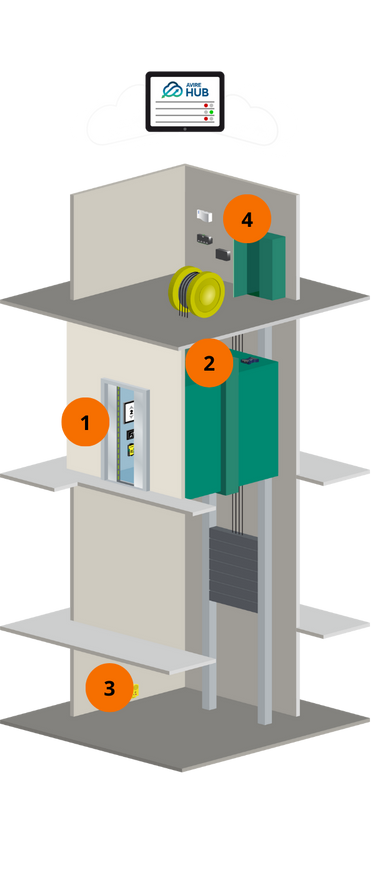
Traditionally, emergency lift phones have been designed to connect passengers with rescue services. However, the new standard highlights the importance of worker safety, extending communication coverage to key areas involved in maintenance and inspection:
- Lift car (existing two-way point)
- Top of car (TOC)
- Lift pit
- Machine room
These four locations are now considered critical touchpoints for emergency communication, helping to ensure the safety of engineers, technicians, and contractors working in or around the lift.
A Small Upgrade, A Big Impact
As John Jackson, Country Sales Manager UK, explains, incorporating four-way communication into a system refresh is both cost-effective and impactful. The hardware cost difference versus a standard two-way digital system is typically less than 30%, making it a smart investment for building owners and facility managers.
“The goal of four-way communications is to protect people working on the lift – during commissioning and maintenance – rather than just focusing on passenger safety,” says John.
Key Benefits of Four-Way Communication
Implementing four-way emergency communication delivers tangible benefits to multiple stakeholders. These include:
- Enhanced Worker Safety
Direct communication from the top of car, pit, and machine room ensures that engineers and technicians are never isolated during maintenance tasks or emergency situations.
- Improved Regulatory Compliance
The EN 81-28:2022 update (in place from February 2025) places increased emphasis on the reliability and scope of emergency communication. Four-way systems position building managers ahead of compliance requirements.
More on EN 81-28:2022 updates →
- Cost-Efficient Modernisation
Upgrading during a planned system refresh involves only a modest additional investment—typically less than 20%—with significant returns in compliance and safety performance.
- Operational Oversight and Uptime
Real-time system monitoring via AVIRE Hub allows for remote diagnostics, proactive maintenance, and faster response times—minimising downtime and unplanned service disruptions.
The DCP Solution
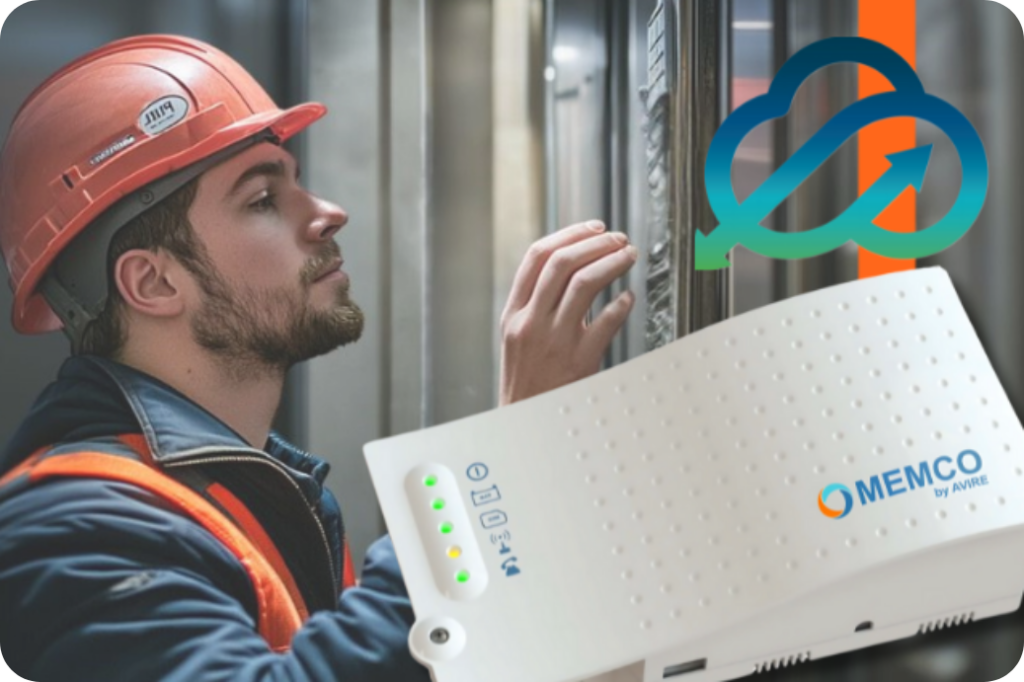
MEMCO by AVIRE’s DCP platform is designed with this modern safety-first approach in mind. When paired with additional devices such as the DAU (Digital Audio Unit) for the top of car, pit phone, and machine room intercom, building managers can implement a fully compliant and robust emergency communication solution.
All components seamlessly connect and are monitored via the AVIRE Hub, our secure cloud-based platform. This not only allows for remote diagnostics and alerts (e.g. battery replacements or connectivity issues) but also provides a clear visualisation of all communication points.
Visualise and Maintain with Confidence
With the AVIRE Hub, managing emergency lift communications is no longer a reactive task. You can:
- Visualise the entire communication setup
- Monitor device status in real-time
- Receive alerts for maintenance actions
- Ensure compliance with current and upcoming standards
Future-Proof Your Lift Communication
Investing in a four-way communication system is more than a compliance measure—it’s a commitment to worker safety, regulatory preparedness, and operational excellence. Whether planning a full lift modernisation or a communications refresh, MEMCO by
AVIRE’s emergency telephone solutions provide a reliable, scalable, and future-ready foundation.
Learn more about our emergency telephone solutions:
https://www.avire-global.com/en-uk/products/emergency-telephones/