








Life safety codes across the U.S. are changing, but not in the way many expect. The shift is not about adding more devices or expanding checklists. It is about performance, reliability, and accountability.
Recent updates to standards from the National Fire Protection Association, including NFPA 72 (2025), reflect a broader change in how systems are evaluated.
The expectation is no longer that systems are installed correctly. The expectation is that they continue to function, communicate, and be verifiable at all times.
Systems Are Now Connected Infrastructure
Life safety systems are no longer standalone components within a building. They are now part of a broader, interconnected infrastructure that supports overall building performance and safety. As buildings become more intelligent and data-driven, life safety systems are expected to operate within that same ecosystem. This shift is influencing how systems are designed, installed, and evaluated.
Today’s systems are:
- Network-connected
- Remotely monitored
- Integrated with fire panels
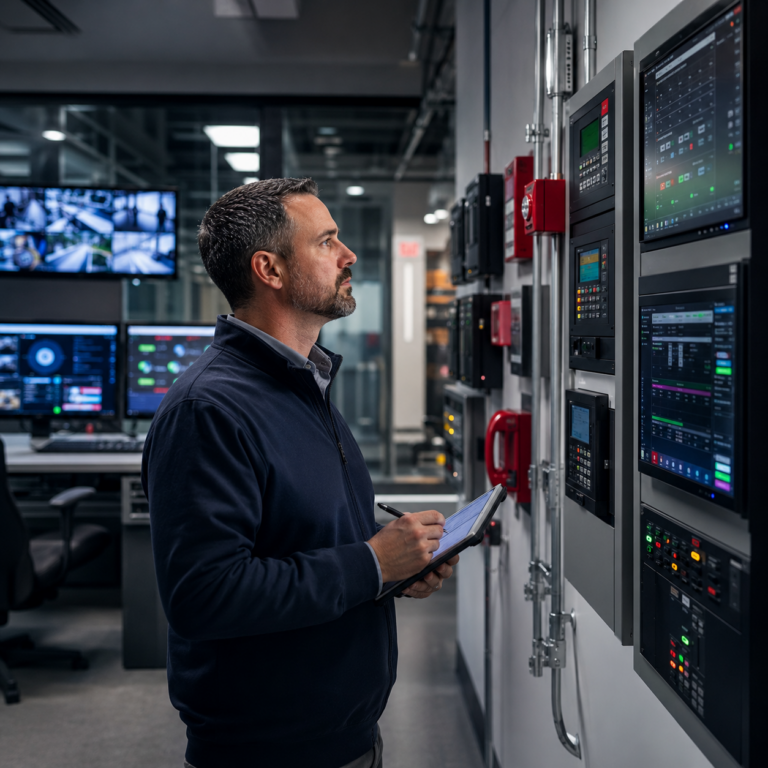
- Displaying real-time system health status
Code updates increasingly reflect this reality. Requirements now extend beyond physical installation to include:
- Network architecture and documentation
- System integration validation
- Power health monitoring and indicators
What it means:
Life safety systems must be secure, properly documented, and capable of continuous operation within a connected environment. This also introduces new expectations around system access, data integrity, and long-term maintainability. Systems that are not designed with connectivity and integration in mind may face challenges meeting current and future code expectations.
System Failure Is No Longer Acceptable
Modern codes and progressive enforcement are placing greater emphasis on survivability and system performance under real-world conditions. It is no longer sufficient for systems to function under normal operating circumstances. They must be designed to remain operational during emergencies, when they are needed most. This shift is being driven by both code updates and increased enforcement.
This includes alignment with standards such as NFPA 72 and NFPA 1225, along with stricter industry best practices.
Key areas of focus include:
- Pathway redundancy such as that provided by class A
- Fire-resistant cabling and routing
- Backup power requirements
- Continuous operation during emergency events
This is not theoretical. These requirements are being enforced through AHJ requirements, inspection, and testing.
What it means:
A system that fails during an emergency is no longer considered acceptable, even if it previously met older requirements. Reliability under real-world conditions is now central to compliance. This places greater importance on system design decisions that prioritize redundancy and resilience from the outset. It also reinforces the need for ongoing maintenance and verification to ensure systems remain fully operational over time.
Visibility & Monitoring Are Mandatory
Another major shift is the requirement for continuous system visibility. Life safety systems are no longer expected to operate silently in the background without oversight. Instead, they must provide clear, real-time insight into their operational status. This ensures that issues are identified and addressed before they impact system performance.
Modern codes require systems to:
- Report faults in real time
- Annunciate issues at a central, attended location
- Integrate with fire alarm systems for supervisory monitoring
This is especially relevant for:
- Emergency communication systems
- Public Safety Distributed Antenna Systems (DAS)
- Elevator communication systems
What it means:
Systems must provide continuous awareness of their operational status, reducing risk and enabling faster response when problems arise. This level of visibility supports proactive maintenance and minimizes the likelihood of unexpected failures. It also improves inspection readiness by ensuring system health can be verified at any time. Ultimately, monitoring is no longer an added feature, but a fundamental requirement.
Enforcement Is Increasing at the Local Level
While codes are developed at the national level, enforcement happens locally. Authorities Having Jurisdiction (AHJs) play a critical role in how codes are interpreted and applied. In recent years, there has been a noticeable increase in the level of scrutiny during inspections. This is driving greater consistency in how requirements are enforced across projects.
AHJs are:
- Increasing scrutiny during inspections
- Requiring documented proof of system performance
- Enforcing communication and radio coverage requirements more consistently
Standards such as International Fire Code Section 510 continue to drive requirements for in-building emergency communication systems, including Public Safety DAS.
Adoption of newer code editions are expanding across states. As this occurs, enforcement is trending toward stricter interpretation, not leniency.
What it means:
Compliance is no longer a one-time milestone. It is an ongoing requirement that must be demonstrated and maintained throughout the life of the building. This increases the importance of documentation, system transparency, and routine verification. Teams must be prepared to validate system performance not just at installation, but during every inspection cycle. As enforcement tightens, gaps in system performance are more likely to be identified and required to be corrected.
What This Means for Building Owners and Project Teams
These changes are impacting how life safety systems are approached across the entire project lifecycle. Decisions made during design and specification now carry greater long-term implications. Installation practices must align with both current requirements and future expectations. Ongoing system management is becoming just as important as initial deployment.
Key considerations now include:
- Can the system be continuously monitored?
- Does it provide clear, actionable fault visibility?
- Will it remain operational during an emergency?
- Is it aligned with current and upcoming code requirements and local enforcement?
The focus is shifting toward:
- Long-term system reliability
- Simplified inspection readiness
- Greater transparency into system performance
What it means:
Building owners and project teams must take a more strategic approach to system selection and management. Short-term compliance is no longer enough to ensure long-term success. Systems must be evaluated based on their ability to perform consistently, adapt to evolving codes, and support ongoing inspection requirements. This shift encourages more thoughtful planning, better coordination across teams, and a stronger focus on lifecycle performance.
The Bottom Line
Life safety codes are not just evolving. They are redefining what it means for a system to be compliant. The focus has shifted from installation alone to long-term performance, accountability, and system behavior under real-world conditions. It is no longer enough for a system to meet requirements at commissioning. It must operate continuously, communicate effectively, and remain functional when it matters most.
This shift is raising expectations across every stage of a project. Design teams must consider survivability and integration early. Contractors are expected to deliver systems that support monitoring and fault visibility. Building owners are responsible for maintaining systems that can withstand ongoing AHJ scrutiny, with clear documentation and proof of performance.
Enforcement is also becoming more rigorous. Inspections are no longer about confirming a system exists, but that it is fully operational and performing as intended. This increases the importance of system transparency, real-time monitoring, and the ability to quickly identify and resolve issues.
The result is a higher standard for life safety systems. Success is no longer defined by how much equipment is installed, but by how reliably it performs. Systems must be designed with the understanding that compliance is ongoing and failure is not acceptable.
Explore Solutions Built for Modern Code Requirements
If you are evaluating or upgrading life safety systems, understanding how these code changes apply to your building is critical.
Explore solutions designed to support:
- Continuous system monitoring
- Reliable communication pathways
- Compliance with evolving code requirements
Or talk with a code specialist to discuss how these changes impact your next project.
CLICK HERE to connect with your local area representative.