








In an emergency, building occupants need more than alarms. They need a way to communicate. Whether someone is sheltering in a designated safe location or helping coordinate an evacuation, two-way voice communication plays a critical role in life safety.
Modern building codes, including the International Building Code (IBC) and NFPA 72, require two-way communication systems in specific locations such as Areas of Refuge or elevator lobbies. However, meeting those requirements across an entire facility can quickly become complex, especially in large or multi-level buildings.
As a result, many professionals are asking an important question:
“Is there a better way to manage emergency communication across the building?”
A centralized system can provide that answer.
Why Centralized Communication Makes a Difference
When emergency communication systems operate independently, it becomes more difficult to respond quickly and effectively. A call from a stairwell on the third floor may ring to a completely different location than one from the fifth floor. Responders may find themselves switching between multiple devices or systems, which delays response time and increases risk.
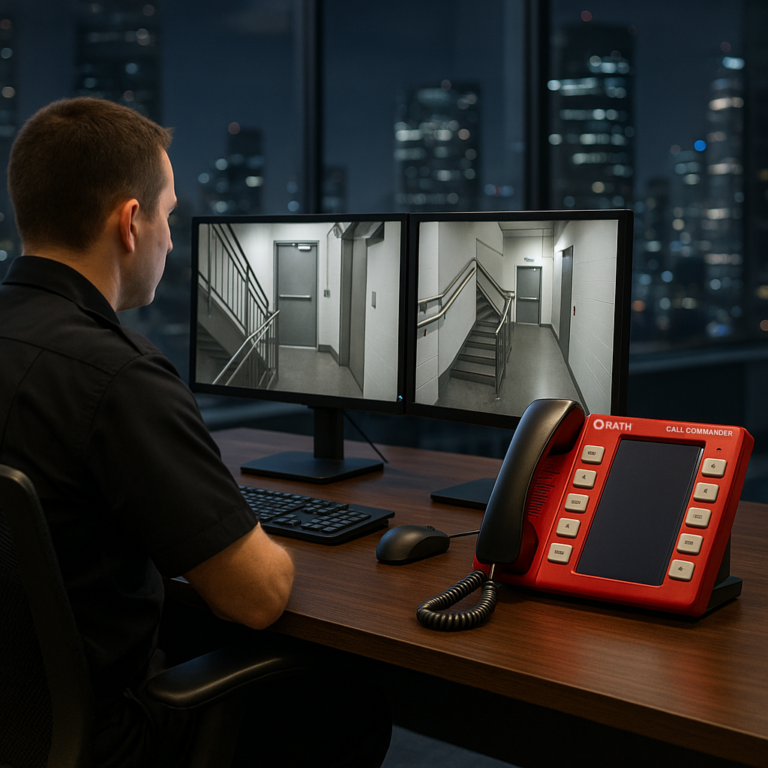
A centralized system connects all designated safe locations to a single Call Commander within the building. This setup makes it easier for on-site personnel to monitor, manage, and respond to emergency calls in real time.
Key Benefits of Centralized Communication
- Improved Situational Awareness: Centralized systems help staff respond quickly to calls across multiple locations.
- Streamlined Code Compliance: A single system can meet IBC, NFPA, and ADA requirements.
- Easier Training and Use: With one interface and one location for call handling, training becomes simpler for facility staff.
- Scalability: Centralized systems are easier to expand across large buildings or multi-structure campuses.
What to Look for in a Centralized System
If you are planning a new build or upgrading an existing system, consider the following features:
- Hands-free, two-way voice communication
- Compatibility with current code requirements
- A centralized command interface for call management
- System health monitoring and testing
- Flexibility to support a range of building sizes and configurations
Considering RATH’s SmartCommand System
SmartCommand, is one of the best examples of a solution designed to meet these needs. It provides a fully compliant, centralized emergency communication system that connects designated safe areas with a single, on-site Call Commander. SmartCommand makes it easier to keep people connected, informed, and protected during emergencies.
If you are evaluating emergency communication solutions for your building, a centralized system may offer the most reliable and efficient path to compliance and occupant safety.
Learn more about SmartCommand