








Elevator communication standards have evolved quickly in recent years, with ASME A17.1 (2019 and 2022) introducing new expectations for two-way voice and visual systems. For some, these requirements are new. For others, they’ve already been part of the job for years.
So, what have those years of field experience taught the professionals who install, inspect, and maintain these systems every day? We asked them what matters most when choosing a solution, and their answers came down to three things: reliability, security, and flexibility.
Reliability. Period.
Two-way communication systems aren’t accessories, they’re life-safety devices. Reliability isn’t measured by how impressive a feature appears, but by whether the connection works every single time someone presses the Help button – whether that’s days or years after installation.
And it’s not just passengers relying on that connection. Inspectors use it to verify compliance, and maintenance teams expect it to work during testing. If the system fails to call out or a response doesn’t come through, downtime, emergency service calls, or even fines can follow. All of which are avoidable with a system built for long-term stability and performance.
No “Ghost Calls.”
Just as important as what a system does is what it doesn’t do. “Ghost calls”- false activations triggered by electrical noise or unstable signaling, have become a major frustration for building owners, monitoring centers, and maintenance providers. Each false alarm can lead to unnecessary callouts, confusion over wiring or software issues, and wasted time for everyone involved.
With decades of experience designing elevator phones long before visual and IP systems entered the market, RATH engineered SmartView 2 to prevent false triggers through robust signal filtering and secure network communication.
The result: fewer maintenance callbacks, clearer testing, and confidence that every call received is a real one.
Seamless, Secure Updates.
Experience has also shown that for these new systems, reliability and IT security are inseparable. As communication systems and devices become increasingly networked, keeping them compliant and protected from potential breaches requires more than just strong passwords. It requires constant software and firmware updates to stay one step ahead.
“An IT security breach is the last thing anyone wants-but manually managing updates on all the devices in your network would be overwhelming. That’s why we automatically push updates through our secure platform, ensuring every unit stays current, protected, and fully supported without disruption,” says Leanne Fernandez, VP of Sales and Marketing.
With several solutions on the market, including online systems that require manual security updates, building owners, IT professionals, elevator consultants and contractors are encouraged to educate themselves about the risks and choose systems that prioritize their protection.
Flexibility to Meet Different Needs.
Compliance may have been the starting point for two-way voice and visual devices, but today’s solutions have to consider the rider experience and building aesthetics as well – while also addressing the wide variety of communications and physical infrastructure requirements contractors face. Without tradeoffs.
SmartView 2 was designed to adapt, and elevator pros have taken notice.
A lineup that includes three different in-cab hardware options (including the new SmartView 2 CE that integrates with CE Electronics’ Elite PI multi-media display) allows contractors and consultants to recommend or specify SmartView 2 with confidence, knowing they can always choose the right configuration for their different customers’ environments.
But most noted by industry pros: The SmartView 2 system accommodates everything from modernizations in older buildings that still use POTS lines to elevator installs in new construction. How? The unique design provides options for using legacy phone lines and Ethernet connections for those who need or prefer it or leveraging modern cellular and data gateways. That flexibility means one solution fits across a range of project types, saving time and creating efficiencies in training, maintenance, monitoring and more.
What a Reliable, Secure, and Flexible System Looks Like.
The SmartView 2 platform provides end-to-end solutions to integrate two-way voice, video, and text communication.
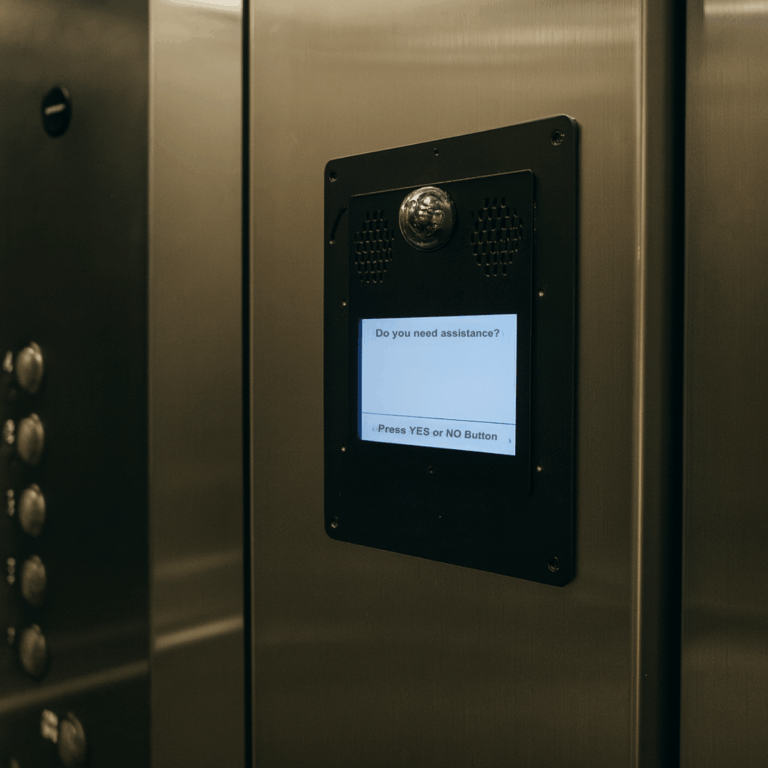
- Integrated seamlessly into the panel, passengers see clear on-screen prompts, hear audio guidance, and can interact with simple Yes/No responses, ensuring help is accessible for every rider, regardless of ability.
- Solutions with built-in cameras can be mounted in the panel or modular camera options can be mounted in more discrete corners of the elevator.
- Through the SmartView Hub, a secure cloud-based portal, building and service teams can remotely monitor all their elevators, verifying connectivity during maintenance checks and supporting emergency calls when they happen with text communication and video feed.
- Updated regularly, the SmartView 2 platform keeps connections secure and user experience at the forefront of industry standards.
Learn more about how the system works by checking out our System Overview video.
Building Toward The Future.
As more jurisdictions adopt and enforce updated two-way communication requirements, these systems are becoming a standard component in elevator installations and modernizations.
SmartView 2 shows how technology can evolve with these standards, combining safety, usability, and security without complicating installation or inspection.
For professionals stepping into this space, the key takeaway is simple: reliability, flexibility and security aren’t features added after the fact, they’re engineered into the foundation of systems like SmartView 2 from the start and are designed for your success.