









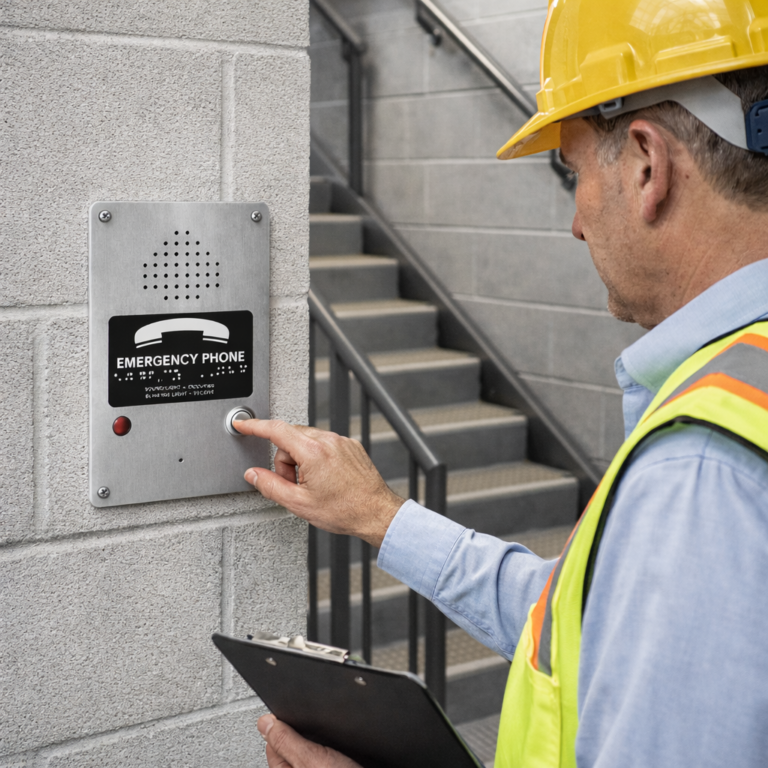
Emergency communication systems play a critical role in building safety. These systems allow occupants to request assistance during emergencies and help first responders locate individuals who may need help. Because of their importance, emergency communication systems are subject to strict inspection requirements before a building can receive final approval for occupancy.
For building owners, contractors, and design teams, understanding what building inspectors evaluate during these inspections can help avoid costly delays and ensure the system meets all applicable codes and standards. Inspectors typically review several key aspects of the system to confirm it has been properly designed, installed, and tested.
Code Compliance
The first and most important factor inspectors evaluate is whether the emergency communication system complies with the applicable building and life safety codes. These codes establish the minimum requirements necessary to ensure communication systems operate reliably during emergencies.
Inspectors typically verify compliance with standards set in place by organizations such as the International Code Council (ICC), the National Fire Protection Association (NFPA), the Americans with Disabilities Act (ADA) and more. In many cases, they will also confirm that the equipment installed in the system is properly listed and approved for emergency communication applications.
During the inspection process, officials may review system documentation, product listings, and installation details to confirm the system aligns with these requirements. If any component does not meet the required standards, it can result in inspection delays or require modifications before the system can be approved.

Proper Placement of Communication Devices
Another important part of the inspection process is verifying that emergency communication devices are installed in the correct locations throughout the building. Codes specify where communication stations must be installed so that occupants who may be unable to evacuate during an emergency can request assistance.
Inspectors evaluate whether devices are installed in locations such as stairwell landings, elevator systems, and other designated assistance locations. They also confirm that devices are mounted at appropriate heights and are accessible to individuals with mobility limitations.
Proper placement ensures that occupants can easily locate and use the communication system during an emergency. If devices are installed incorrectly or outside of required locations, inspectors may require adjustments before the system can pass inspection.
Reliable Two-Way Communication
Emergency communication systems must provide reliable two-way communication between the person requesting help and a staffed monitoring location. Inspectors often test the system during the inspection process to confirm that communication functions properly.
During testing, inspectors may verify that calls connect successfully, that audio is clear and understandable, and that communication remains active until the call is completed. Clear communication is essential so that occupants can describe their situation, and responders can provide instructions if necessary.
Inspectors also confirm that the monitoring location can identify where the call originated. In large buildings with multiple communication stations, accurate location identification is essential for ensuring responders can quickly locate the individual requesting assistance.
Power and Backup Requirements
Emergency communication systems must remain operational even if the building experiences a power outage. Because emergencies often involve loss of electrical power, building codes require these systems to include reliable backup power.
Inspectors review the system’s power configuration to confirm that backup batteries or other standby power sources are installed and function properly. They may also verify that the system meets the required standby operation time defined by applicable codes.
Ensuring the system remains operational during power failures is essential for maintaining communication capabilities when they are most needed. A properly designed backup power system helps ensure occupants can still request assistance even if the building’s primary electrical supply is interrupted.
Signage and Instructions
Clear signage is another important element inspectors evaluate when reviewing emergency communication systems. Signage helps occupants quickly identify communication devices and understand how to use them during an emergency.
Inspectors typically confirm that communication stations are clearly labeled and include instructions that explain how the system works. In many cases, signage must also indicate that the device connects to a monitored location where assistance will be dispatched.
Effective signage reduces confusion during emergencies and helps occupants quickly initiate communication when assistance is needed.
System Identification and Monitoring
Modern emergency communication systems must allow monitoring personnel to clearly identify where calls are coming from within the building. Inspectors evaluate whether the system provides accurate location information when a call is placed.
When multiple communication stations are installed throughout a building, each station must be identifiable, so responders know exactly where assistance is needed. This capability is especially important in large or complex facilities where response time can make a significant difference during an emergency.
Inspectors may also review how calls are routed and confirm that the monitoring location responsible for answering calls is properly staffed and capable of responding to emergencies.
Testing and Documentation
Before final approval, inspectors typically require verification that the emergency communication system has been fully tested. Functional testing ensures that each communication station can successfully initiate a call and that the system performs as intended.
Inspectors may review testing records or observe demonstrations that confirm calls are properly routed to the monitoring location, and that communication is clear. They may also verify that installation documentation matches the approved system design.
Proper testing and documentation provide assurance that the system will continue to function reliably throughout the life of the building.
Preparing for Inspection
Understanding what building inspectors evaluate during emergency communication system inspections can help project teams prepare for a smoother approval process. When systems are designed with code requirements in mind and installed according to manufacturer specifications, inspections are more likely to proceed without delays.
Building owners and contractors who prioritize compliance, proper installation, and thorough testing can help ensure their emergency communication systems meet inspection requirements and provide dependable communication during emergencies.